
Inspiration and advice
Upholstered wall panels, shapes, colours and fitting
Upholstered wall panels, rectangular, square and geometric. Colours, shapes and how to fit upholstered panels in a bedroom or office.

Introduction
Upholstered wall panels are one of the quickest ways to change the look of a bedroom, a living room or a hallway with no major building work. Soft, fabric-covered upholstered wall panels combine decoration with performance: they quieten a space, protect the wall and create a welcoming atmosphere. Find out which shapes of upholstered panel are available, how to choose a colour and how to fit panels on a wall yourself.
Contents
What are upholstered wall panels?
An upholstered panel is a decorative wall element made up of a rigid core (chipboard or MDF board), a layer of upholstery foam and an outer decorative fabric. Upholstered panels come in dozens of colours and patterns, from classic white and grey to bottle green, navy and deep anthracite.
Upholstered wall panels do three jobs at once: decorative, protective and acoustic. The soft foam damps sound reflecting off the wall, so upholstered wall panels genuinely improve a room's acoustics, particularly in bedrooms, studies and children's rooms.
An upholstered panel is built like this: a chipboard or MDF core gives rigidity and something to fix through, upholstery foam gives softness and acoustic insulation, and the fabric determines the look and the colour. Together they make a panel usually 3 to 5 cm thick, light and easy to fit.
Shapes of upholstered panels, square, rectangular and geometric
The shape of upholstered panels is one of the key elements of a scheme. Different shapes give a completely different visual effect on the wall, from calm regularity to a dynamic, geometric composition. Here is an overview of the most popular shapes.
Rectangle: classic and universal
The rectangle is by far the most popular shape of upholstered wall panel. A rectangular panel can be fitted horizontally or vertically, which gives different optical effects: a horizontal rectangular panel lengthens the wall, while a vertical one makes the ceiling appear higher. Rectangles laid in a brick bond or symmetrically create a repeating, elegant pattern, ideal for a bedroom or a living room.
Square: a modern geometric grid
Squares laid out in a grid create a calm, symmetrical pattern. Squares and rectangles combined in one composition create a more dynamic arrangement, and this style dominates in modern bedrooms and hotel interiors. Grey square panels on a white wall are a classic proposition for anyone who values minimalist design.
Geometric shapes: hexagon, diamond and trapezium
A geometric upholstered panel in a hexagon, a diamond or a trapezium lets you create compositions on a wall that standard panels cannot achieve. Different shapes can be combined to make a one-off pattern matched to the owner's own preferences. A geometric arrangement of panels works splendidly in modern living spaces.
Vertical and horizontal panels: a wainscoting effect
An upholstered panel in the form of a narrow vertical or horizontal batten creates the effect of soft wainscoting. A vertical arrangement of narrow upholstered panels recalls classic wainscoting, but in a modern, soft version. It is an elegant interior finish in a classic or glamour style, often used in the bedrooms and hallways of luxury flats.
| Shape | Visual effect | Interior style | Recommended room |
|---|---|---|---|
| Horizontal rectangle | Lengthens the wall | Modern, Scandinavian | Bedroom, living room |
| Vertical rectangle | Makes the ceiling appear higher | Classic, glamour | Bedroom, hallway |
| Square in a grid | Calm and symmetry | Minimalist, hotel | Bedroom, office |
| Geometric (hexagon, diamond) | Dynamism, originality | Modern, artistic | Children's room, living room |
| Vertical battens | A wainscoting effect | Classic, glamour | Hallway, bedroom |
Colours of upholstered panels, how to match them to a room
The colours of upholstered panels on the market cover the full spectrum, from delicate pastels through classic neutrals to deep, emphatic shades. Choosing the colour well is the foundation of a successful scheme.
Neutrals: white, grey and beige
White upholstered panels are a classic, safe proposition for any interior. White panels brighten a room and work with furniture in any colour. Grey panels give a more refined, modern effect, and a dark grey fabric on a pale wall creates a subtle contrast. Beige and cream shades create a welcoming, warm atmosphere, ideal for bedrooms and spaces meant for relaxing.
Deep colours: bottle green, navy, anthracite
Bottle green on the wall behind the bed is one of the most fashionable trends in bedroom design. An upholstered panel in bottle green, paired with timber furniture and gold accents, makes a striking, luxurious composition. Navy and anthracite work in a similar way: they define the sleeping zone and give the wall depth and a modern style.
Fabric colours and patterns: texture matters
Panel colour is not only about hue but about the texture of the fabric. Velvet reflects light differently from linen or bouclé, so the same shade in different fabrics gives a completely different end result. When choosing upholstered panels, always check a fabric sample in the real light of your own room before you order.
A practical rule: upholstered wall panels should be one or two tones darker or lighter than the wall colour. Colours that are too close merge visually and lose their decorative effect. Contrast is what turns a panel into a striking accent.
Where to use upholstered panels: schemes and ideas
Upholstered panels work perfectly in any room where both appearance and acoustic comfort matter. Here are the most common and most striking applications.
Bedroom: the wall behind the bed, and headboards
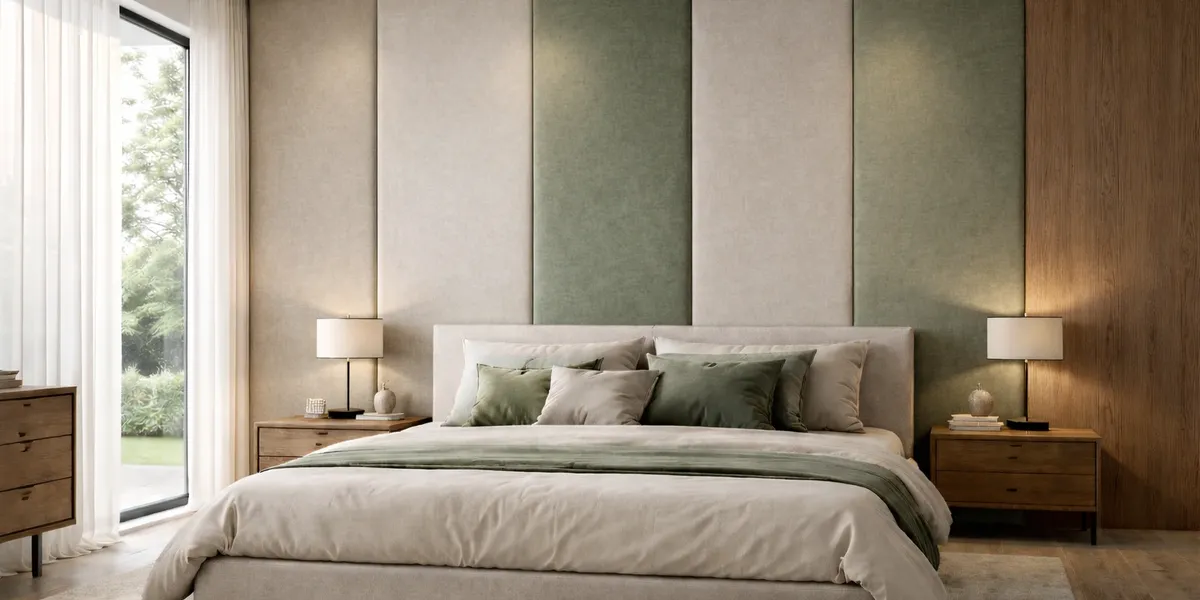
Upholstered wall panels in a bedroom are the most popular application of all. A wall behind the bed covered in upholstered panels acts as one large headboard: soft to the touch, visually warm and sound-absorbing. Upholstered panels are a perfect replacement for costly upholstered headboards that are awkward to fit. Panels in warm, muted fabric colours are ideal for a bedroom: beige, sage, bottle green or graphite grey.
Living room: a feature wall treatment
In a living room an upholstered panel acts as a wall decoration that gives the space a modern character. A wall behind the sofa covered in square or rectangular upholstered panels creates a striking focal point. Combined with spot lighting, the panels create a welcoming atmosphere in the evening.
Office and study: acoustics and professionalism
An office is a room where acoustics have a direct bearing on concentration and comfort at work. Upholstered wall panels absorb sound and quieten a space, reducing the reverberation that can be a nuisance in modern offices with hard floors. Grey panels, or panels in corporate colours (navy, green), give a study or an office a professional, presentable look.
Hallway: a warm welcome for guests
The hallway is the first impression a home makes. An upholstered panel in a hallway, on the wall beside the coat rack or along a whole corridor, warms an interior immediately and gives it character. There is a practical side too: the panel protects the wall from scuffs by clothes, rucksacks and bicycles, which matters in a narrow hallway.
Children's rooms and commercial premises
Upholstered panels also work well in children's rooms, where the soft surface safely cushions any knocks and the wide choice of colours and patterns allows a storybook scheme. In commercial premises, in receptions, beauty salons and restaurants, upholstered panels create a luxurious atmosphere and provide acoustic insulation for clients. Private clients and the owners of commercial spaces alike value how well these products perform and how long they keep their looks.
Fitting upholstered panels, step by step
Fitting upholstered panels is a simple, quick process that needs no specialist tools. Upholstered wall panels can be fitted yourself in a single afternoon. Here is the process in detail.
What you need
- A spirit level (or a spirit level app on your phone)
- A pencil to mark the panel positions
- Construction adhesive or strong double-sided tape (for light panels)
- Screws and plugs (for heavier panels or permanent fixing)
- A tape measure and, if cutting is needed, a jigsaw
Step 1: planning the layout
Before fitting, plan the panel layout on the wall, ideally on paper or in a simple design app. Decide whether you are laying panels from the middle of the wall outwards (symmetrically) or from the left-hand edge. Mark the position of each panel in pencil, checking level and plumb with the spirit level. The layout is easy to adjust at the planning stage, before you bond the first panel.
Step 2: preparing the wall
The wall must be dry, clean and free of dust. Degrease the surface if the wall was painted with emulsion, as construction adhesive bonds better to a degreased surface. Wallpaper has to be removed before fitting: adhesive over wallpaper will not give a lasting fixing.
Step 3: fitting with adhesive or screws
Light upholstered panels (up to about 2 kg each) are fitted with construction adhesive applied to the back of the panel in spots or around the perimeter. Stronger or heavier panels need to be screwed through the panel in an inconspicuous place (under the fabric near the edge, say) or hung on fixing hooks on the back. Fitting panels with adhesive is quicker and leaves no holes in the wall, which makes it ideal for rented flats.
Step 4: adjusting and keeping clean
After bonding each panel, check its alignment with the spirit level and press it against the wall for 30 to 60 seconds. Correct any misalignment between panels straight away, as adjustment is difficult once the adhesive has set. When fitting is finished, clean fingerprints off the fabric with an upholstery brush or a lightly damp cloth. Regular brushing makes upholstery fabrics easier to keep clean.
Want to see upholstered panels in the flesh before buying? Order fabric samples and judge the colour in your own room.
Frequently asked questions, upholstered wall panels
Which shapes of upholstered panel are the most popular?
The most popular shapes are the rectangle and the square. A rectangle laid horizontally or vertically gives an elegant, classic effect. A square laid in a grid is more modern. A geometric panel shaped as a hexagon or a diamond is the choice for anyone looking for an original, emphatic accent on the wall.
Do upholstered wall panels really improve the acoustics?
Yes. Upholstery foam absorbs sound energy, reducing reverberation and reflections from hard surfaces. Upholstered panels will not replace professional acoustic panels in a recording studio, but in a bedroom, an office or a living room they genuinely quieten the space and improve a room's acoustic comfort.
How do I fit upholstered panels to a wall?
Upholstered panels can be fitted with construction adhesive (for light panels) or with screws through the panel core. Easy adhesive fitting needs no drilling and leaves no permanent marks on the wall, which makes it ideal for rented flats. Step-by-step fitting instructions come with every set.
Are upholstered panels suitable for a bedroom with children?
Yes. Upholstered panels are the ideal answer in children's rooms: the soft surface is safe, and the wide choice of upholstered panels in different colours and patterns allows a storybook wall. Fabrics used in panels for children should be safety-certified and easy to keep clean.
Which colour of upholstered panel should I choose for a bedroom?
Matching the colour to a bedroom depends on the style of the interior and on personal preference. Popular colours for bedroom upholstered panels are bottle green (with timber and gold), navy (glamour style), greys (minimalism) and beige (classic warmth). Always check a fabric sample in your own light before ordering.
Can upholstered wall panels be washed?
Most upholstery fabrics can be cleaned with a lightly damp cloth or an upholstery brush. Avoid large amounts of water and aggressive cleaning products, which can discolour the fabric or damage the foam. Regular vacuuming is enough for everyday care and keeps upholstery looking good for years.
Can upholstered panels be fitted in offices and commercial premises?
Yes. Upholstered wall panels work excellently in offices, studies and commercial premises: they improve the acoustics, give an interior a professional look and stand up to heavy use. For commercial premises we recommend fabrics that are easy to keep clean and resistant to abrasion.
In summary, choosing upholstered panels for any room
Upholstered wall panels are for people who value comfort, good looks and a quick interior finish with no building mess. The wide choice of upholstered panels in different shapes, colours and patterns means any interior, from a bedroom through an office to a hallway or commercial premises, gains a new character from them.
Strama Panels offers upholstered and acoustic wall panels with delivery across Poland. See the full range and order fabric samples: → Upholstered and acoustic panels: the Strama Panels range


